Friday, 9 May 2014

Information: Useful facts about chicken eggs


My two new hybrids have just started laying. It's reminded me how amazing eggs are, but how little most people (including myself) know about them.
For example, how does a hen actually produce an egg and how does an embryo inside the egg develop into a chick, at what age does a hen start laying and what is the best way to store eggs?

Here are the answers to some frequently asked questions:

When does a hen start to lay? 
 A hen usually starts producing eggs at about 19 to 24 weeks. This is the time they reach sexual maturity. The actual age an individual hen starts laying varies due to many factors, such as diet, stress, breed, environment and light.

What is each stage in a hen's development after hatching called?
  There are many opinions and definitions on how old a female chicken can be when she is a chick, pullet or hen. However, this is the most common view:

  • Before they start to lay they are a pullet (a female chick is also a pullet, but most people only call them pullets when they are sure they are females because with most breeds it is impossible to identify the sex of the chick when they first hatch, unless you have sex-linked chickens *post about sex-linked chickens and hybrids coming shortly*, but basically with sex-linked birds the male and female chicks are different colours.) 
  •  At about 18 - 24 weeks they are known as Point of Lay Pullets (POL), and this is usually the age that breeders and suppliers sell their adult birds.
  • After they have started producing eggs (they have reached sexual maturity) they are usually known as a hen. However, opinions, of course, differ greatly and some say that they are not a hen until they are a year old. Or, they are not a hen until they have been laying for 4 or more months, or when they go through their first moult.
How often does a hen lay?
A hen can only produce an egg every 25 hours, so about one a day, but it depends on the breed and age of the bird. Usually hens are most productive in their first 2 years of life, and then their egg productivity starts to decrease. Hybrids lay more than Pure Breeds. Some hybrids, such as the Gingernut Ranger or Black Rock, can lay up to 300 eggs a year. See this article for more information on the best egg-laying pure breeds.


Do you need a cockerel for the hens to lay?
No! It is widely believed that hens will only lay eggs if there is a cockerel present. However, hens will lay even if they have never even seen a cockerel before. A cock/rooster is only needed if you want fertile eggs to hatch, as eggs will not hatch if they are not fertile.

How is the egg formed inside the hen?
Diagram showing the position of the different parts of an egg.
Credit: Birdbrain99 (author)
When a female chick hatches, she has thousands of very small ova, which are stored in the ovary. She releases these into the oviduct when she reaches sexual maturity. An ovum is an undeveloped yolk; the albumen (white), the membrane and the shell are added as the yolk travels through the reproductive system. This whole process takes about 25 hours. If the hen has sperm (from the cock bird - she will only have sperm if she mates with a cock/rooster) is added to the yolk just before the albumen encases the yolk. The egg passes out of the hen through the cloaca, or vent. This is also used for excretion, and both the large intestine and the oviduct lead to the cloaca but as the egg is released, the hole to the large intestine closes up so that the egg is not contaminated by faeces. 


How long does an egg take to hatch?
Chicken eggs normally take 21 days to hatch, but various factors influence the hatch date, such as temperature and humidity. The eggs can be stored for up to 7 days before incubating.

What temperature and humidity do the eggs need to hatch?
It needs to be about 37.5 degrees Celsius (99.5 Fahrenheit). There are many different opinions on humidity, but the accepted idea is 40-50% from day 1 to day 18, and then 60-80% day 18 to hatching (usually day 21).

How can you be sure the eggs are fertile?
The eggs will only be fertile if the hen that laid them has been mated by a cock. It is unlikely that all of the eggs will be fertile. Cocks have 'favourite' hens, and may not bother mating with the others, or sometimes the hen doesn't get caught. However, a cock can fertile many eggs with one mating, and the sperm will stay in the system for up to three weeks. To check if an egg is fertile, you can use a technique called "candling". This only works after the egg has been in the incubator (or under the broody hen) for about 10 days. It is done by shining a bright light, such as a torch light, through the eggs. If the egg is fertile, blood vessels leading from a dark central spot (the embryo) should be visible. If the eggs is infertile or has died the eggs should be completely clear when you chine the light through it. If you are sure it is infertile, discard the egg, but if you are unsure, leave it in in case it is fertile. It is best to get hatching eggs from a recommended breeder or supplier nearby, so that you can check their stock and the environment the hens that the eggs are from are healthy. It also means the eggs have less of a distance to travel, as you can collect them. If not, you can order eggs online and have them delivered through the post, but the eggs may not be so fertile, or one might break during the journey.

A selection of different coloured and sized eggs.
Credit: Birdbrain99 (author)
How many hours of daylight does a hen need to lay?
She needs at least 14 hours of light a day for maximum egg production. However you can supplement the natural light in winter with artificial light in the coop.

Do hens ever lay misshapen eggs?
Yes. If this is a very infrequent occurrence, it isn't anything to worry about. However, if it is a regular occurrence, make sure your hens have plenty of calcium (in the form of oyster shell grit and supplements) and a good diet of layer's pellets. Young POL pullets often lay small, strange eggs at first, before they get into a routine.

Where do hens lay?
Most coops (see this post) have nest boxes attached. Most hens will lay in the darkest, safest spot they can find, but you can encourage hens to lay in the nest box by placing a dummy egg or a golf ball there at first as they like to lay where other hens have laid. If you have hens free-ranging they may find another place to lay outside, but most hens are happy to come back to the nest box.

Do I need to keep eggs in the fridge or what other ways to store them are there?
Many people keep eggs in the refrigerator, but this is unnecessary.  In a fridge, eggs in fact deteriorate faster because of the constant change in temperature when you open and close the door. Eggs can be stored at room temperature in an egg box or you can use an egg ramp. Egg ramps are good because you use the eggs at the bottom of the ramp first, and place the new ones at the top so you are not eating very fresh eggs and leaving the older ones to rot. Eggs can be stored for a very long time in a cool cellar or basement, but eggs stored at room temperature can be kept for for weeks. If you are unsure whether an egg is still fresh, you can place it in a dish of water. If it sinks to the bottom, it is still fine. If it floats or is on it's end, it is bad.
Never wash eggs before storage because this removes the protective outer layer on the eggshell and therefore bacteria can enter the egg and cause you to be ill. If you do get a soiled egg, use a piece of kitchen towel to remove the dirt as much as possible, and then when you come to eat it you can give it a quick rinse as long as you use it straight after. 
Many of the guidelines as to how long eggs last is about shop bought eggs, but shop bought eggs have already been stored for days or even weeks before they are sold!
Once you have refrigerated an egg, do not then store it at room temperature as the protective coating will have already been removed by being in the fridge.

Tuesday, 25 March 2014

Stories: Dealing with Death... No, I'm really not sure how!


I haven't written in a very long time, I'm sorry. But what can I say? It has been a very traumatic few months, as my characterful, cheeky, lovely Bonnie died. But that's not it. My beautiful Birdie got a throat tumour and had to be put down by the vet because food was unable to pass through. It takes a while before I find I can write about these things because I'm very close to all my chickens... Oh dear I'm crying again! I wish I could write a post about how to deal with a chicken's death, but I can't because I don't know how! I think you just have to remember what an amazing life they had with you. That you did everything you could for them. That you loved them, that they were able to be chickens and that their life was wonderful.

I feel so honoured to have been a part of their lives, and I will never forget them as long as I live.

Don't ever make the mistake of detaching yourself from your hens, even if they are egg-layers or for meat: you will regret it. You'll wish you'd known more about them; really discovered who they were. Just accept that when they do pass away you will be sad, and remember you will get through it, like I've done. Don't be ashamed to cry over a chicken: they are one of the most amazing, funny, quirky, beautiful animals on Earth. Love them while they're here... even if you eat them in the end!

Here are some photos of them to remember them by, but sadly these two hens are the two I don't have so many pictures of. See this post to see a film of them all too.


Bonnie was very patient when it came to bath-time!
Credit: birdbrain99 (Author)


Fast asleep!
Credit: birdbrain99 (Author)


Monday, 9 September 2013

Information: The Moult


Moult is the shedding of old feathers and the growing of new ones. Chickens do this usually once a year, between late Summer and early Autumn, but it varies between individuals. In chickens, the whole process may take up to two months.


Moulting is a very energy expensive process, and you can expect your hens to stop laying while they do this.


Moulting hen.
Credit: Sierravalleygirl  Permission: CC BY-NC 2.0

Care of Moulting Hens.

Hens do not usually need a helping hand during this process, but you must understand that they are much more susceptible to disease and illness while they moult because much energy is being spent. It is particularly important at this time to make sure your hens have a balanced diet. Keep stress to a minimum and avoid adding new birds during the moult.


My moulting bantam comes into the conservatory to warm up!
Credit: birdbrain99 (Author) 
Although your chickens should not shed most of their feathers at once, some do! Sadly, I do not have any pictures of Bonnie from a couple of years ago when she moulted practically all her feathers except a couple of wing and tail feathers. Although this is unusual it does happen. This year, one of my bantams Nutmeg did a similar thing, but not quite so bad (see photo). In this case, she is now in a cage in the conservatory where she will be warmer until she re-feathers. Often even birds in her state should be left outside with the other hens if it is not too cold, but it has been windy, rainy and cold here so she has had to come inside. If you notice birds shivering or fluffing up whatever feathers remain then they should be brought indoors and warmed up. Without feathers, birds are not water proof so quickly get chilled when it rains.

 If you notice bloodied feathers or any kind of scabs/blood they need to be separated from the rest of the flock until the new feathers grow through. This is because sometimes other hens will peck at the feathers if the chickens don't have enough protein, so give them some mealworms, boiled and crushed egg (shell included), a little meat and sunflower seeds.
New pin feathers coming through.
Credit: birdbrain99 (Author)

When the new feathers begin to come through, they are called pin feathers. Pin feathers are growing feathers that are wrapped in a protective sheath made of keratin. They are very delicate at this time and so many chickens will not enjoy being handled, and may struggle, damaging the growing feathers. For this reason, handling should be kept to a minimum whilst they moult.


Monday, 5 August 2013

Chicken Care: Keeping Chickens Cool in Hot Weather

We're having unusual weather in the UK this year, with the rainy Summers being replaced by hot, sunny weather.

Chickens can't sweat like us; they have to find other ways to keep cool. They pant, drink more water and seek shade. In really warm weather you may want to make them more comfortable with the following ideas.

    1. Provide shade. If you have a moveable run, place it under a tree,or shady place. Just keeping your hens out of direct sun will help considerably. If your run is stationary, wet a white sheet and sling it over the run. Make sure the sheet is white as this will reflect the sunlight away from the run, and if it is wet the water will begin to evaporate, taking the heat away with it. The sheet may need dampening again throughout the day. If your chickens are free-range, they should be able to find shade under a bush or tree themselves but it's good to try one of  the above ideas anyway, so you can be quite sure they have a cooler place to go.


    2. Water Trough. You could try lining a shallow tray with pebbles and then filling it with water. The hens will stand in this to keep cool. Another option is pouring water  onto the ground to form a muddy puddle. They can sit and scratch in it.


    3.  High water content food. My hens love watermelon in hot weather, and it really does help to keep them cool. Other high water content foods can be given and are enjoyed, particularly if they have just come out the fridge!


   4. Ice. You can place a few ice cubes in the water hopper to keep the water cool in the day, or you can freeze a plastic bottle filled with water and place it in the run. The hens can sit next to it to keep cool.

    5. Hose Pipe. Hosing down the run a little will keep the ground cooler and if you use a spray attachment then you can spray your hens too! This should only be done if they want it and if the spray is fine. Don't actually hose down the chickens, or soak them, this is not good for them! However, a mist spray will help keep the air cool and moist.


I hope these ideas help and I hope you and your chickens enjoy the rest of the Summer!


Sunday, 7 July 2013

Chicken Care: Chicken Coop Maintenance and Beddings


Cleaning

Regular cleaning is important if you want healthy, happy hens. This can be anything from a daily, weekly, monthly or yearly clean, depending on how many bird you keep, the coop and the system you use.

Cleaning out the chicken house is something that puts off quite a few people from raising chickens; but it needn't be such a burden!
However, once a year, the whole coop will need hosing down and disinfecting with a mild bleach solution or poultry disinfectant.

Here are a few of the most popular systems for cleaning and are fairly economical.

The Deep Litter System.
This system is most frequently used with large numbers of hens, and large coops. Instead of cleaning the droppings out, you just add new bedding over the top, stopping the hens from treading on it. Make sure you have plenty of ventilation for this system, and clean the whole thing out once a year. Long straw doesn't work for this as the moisture runs through. This system works best in winter, providing extra heat on cold nights.

Spot Cleaning.
I currently use this system because my coop is relatively small and I currently only have a few hens. You will need a small trowel or scoop. Scoop the droppings out daily or every few days. Again, long straw can be used but is not too suitable because it is difficult to scoop out the dropping without taking all the bedding with you! This system is good for composting because you add a little bedding with plenty of manure to the compost heap every few days or it can be added straight on to the garden.

Regular Cleaning.
It is possible to give a good layer of bedding and change it all weekly to monthly. I usually use this if I go away so my "hen sitter" doesn't need to clean them out much, if at all. Not the best system if the perches are near the door, because the hens will have to walk through the droppings to get into the coop.

Bedding


Type:                                                             Pros &Cons:                                                                          

Long Straw - This can be quite cheap if you buy in large bales from a farm, however you will need to be extra careful of mites and lice. Red mites may also hide inside the straw. It is not the most absorbent litter, and can not be used for spot cleaning. Good insulator and great for composting or mulching. I have heard from a couple of sources that it can cause crop impaction, but very rare. Hens like it in the nest boxes.

Chopped Straw - Better absorbency than long straw and can be used for spot cleaning. Mites may still hide in it but it's much less likely. Despite it's disadvantages, I have used this for years, and found it perfectly adequate. Can be insulating, and great for composting and mulching. 

Oilseed Rape Straw - I didn't even know this existed until recently, but I am completely converted! It  smells nice, can be composted, very absorbent, insulating, if chopped, great for spot cleaning and dust-free. It's also one of the cheapest and most economical beddings.

Hay - Can harbour fungi, but if replaced regularly and kept dry, works OK, good for nests but don't use for chicks or broody hens. Not the best absorbency, not good for spot cleaning.

Hemp - Hemp bedding, such as Aubiose, is good to use. Sorry, I have never used it for chickens, but sources say it works well, with good absorbency and dust-free.

Woodshavings - Best if dust extracted. Very dusty shavings should not be used. Needs a lot longer to rot down than  the other beddings I have talked about, so will need to be in a separate compost heap. Very absorbent and great for most cleaning systems (see above).  

Sand - Absorbency OK, not good for composting but can be reused by sieving the sand through and using the droppings on the compost heap. Not at all insulating. 

Leaves, bracken, etc. - Some people do use these as bedding. Can't give an opinion on dried leaves, but bracken is a good insect repellent and used to be frequently used in the olden days, but apparently should not be consumed by the chickens, so I wouldn't risk it!

Newspaper - Not very good absorbency, and there is some debate about whether the ink is bad for them. Good insulator.


Wednesday, 12 June 2013

Chicken Care: Feed

One of the most important aspects of responsible chicken keeping is clean, fresh food and water.

There are many different feed types, and they all have their advantages and disadvantages. I'll list as many as I can here, but you may want to do further research elsewhere. The following feeds are the most commonly found and popular, and I believe you can find them in both the UK and US, if not other countries too.

Bonnie and Daffy help  themselves to pellets.
Credit: birdbrain99 (author)

Pellets - Probably the most popular feed, I use this for my birds. It should contain at least 16% protein for healthy, laying hens. Layer's Pellets provide most of the essential ingredients to keep your hens healthy whilst laying. Layer's Pellets should only be used after 18-25 weeks of age, or when the first egg is laid. Before that, Grower's pellets should be given. You should not feed grower's pellets to laying birds, either. If you have cocks and hens, layer's pellets are fine to feed to all of them.

Mash - This is quite a popular option too. Basically it is the same as pellets, but it has not been compressed into pellets. It is finely ground into lots of bits or a powder. If you don't have much space for your chickens, this will stop them getting quite so bored as it takes longer to eat than the same amount of pellets. However, I don't feed it often to my hens because of a beak problem one has. She finds pellets easier to eat.
You can mix mash with a little water to make a kind of paste but if you do you will need to change it a couple of times a day so that it doesn't go sour. My hens adore it though, so I just give it as a healthy treat sometimes! You can leave it dry, but depending on how fine it is the chickens may be able to pick out their best bits.

Mixed corn (also known as "Scratch") is a great treat.
Credit: birdbrain99 (Author)
Mixed Corn - This is best not fed as their main feed, but it can be given in small quantities scattered on the
ground or in straw where the chickens will be able to
scratch around for it, keeping them active and preventing them from becoming bored. I tried mixing it in with the chickens' pellets,  but they just chucked all the pellets out of the hopper, so I was basically feeding them corn and wasting a lot of good food! So it is best to choose another feed and just use corn as a supplementary feed.

Oats - These must not contribute a main part in you chickens' diet as oats have hardly any nutritional value and your birds can run fat. I only feed as a very occasional treat and in the morning in winter when I scatter some down with the corn when the birds need the extra energy to keep warm.

Chick Crumbs - It is especially formulated for chicks and should not be fed after this stage.

Extras - Your hens will enjoy kitchen scraps, but this shouldn't be a main part in their diet. Make sure there is not a high sugar or salt content. They will love lettuce and salads but if you notice that their droppings look runny they could be eating too much greens or other foods so limit these, and if you notice that a certain food is having a negative effect on your chickens' health stop feeding it. There are many lists available on safe foods for chickens on the internet and in books, so please do your research before feeding. This article is a great starting point! As a rule, don't feed chicken scraps that are mouldy, off, or you wouldn't be ok about eating yourself.
If your hens are not free range then they will enjoy a bit of grass just make sure you cut it very small as it can cause Crop Impaction. It is advised not to feed grass cuttings from petrol lawn mowers.

Grit - This is not strictly a "feed", but should always be available. They use grit in their digestive system to help grind up the food. Oyster Shell grit should also be available, as it is an important source of calcium. You can by these online or at poultry/farm shops. If your hens are free-range they are unlikely to need normal grit, as they will probably find enough around, but Oyster Shell grit should still be provided.

How much will a chicken eat a day?
The average hen will eat about 110 - 150 grams a day, but it depends very much on the breed, where they live, the season, etc.

How often do I need to clean the feeder, and what do I use?
Clean out the feed hopper/trough immediately if it gets soiled or you notice any algae or mould.  If not, every month or so. Use a safe poultry disinfect, and follow the instructions on the label carefully. Otherwise, you can use an ecological washing up liquid and rinse well.

Where should the feed be placed, and when should I feed the chickens?
The hopper should be placed in a dry, sheltered and light area, where the chickens can access it easily. It is best if they have their main feed available at all times, but treats, corn, etc. can be given when you like (as long as it's not enough to fill them, preventing them from eating their main feed) and as long as you've established a good routine.


Hand feeding is one of the best ways to tame chickens!
Credit: birdbrain99 (Author)
  • Do not use feed after the best before end date.


  • Store the chicken feed in a cool, dry place.


Monday, 10 June 2013

My hens relaxing in the Summer Sunshine!

Although a chilly start to the year, June has brought warmth and Sun! Here's a video of them enjoying the Summer days:D Bonnie (my Light Sussex) even tucks her head under her wing, she is so relaxed!

Note: Best not to view full screen because it is very pixelated!

Monday, 3 June 2013

Chickens: Top 5 best egg-laying pure breeds

If you are looking for ideas on which chicken breeds are best for you, one of the first questions you should ask yourself is, "do I want chickens for eggs, meat, pets or some other reason (showing, breeding, etc.)?"
If you are looking for eggs, then I have put together a list of five pure breeds that might be right for you. Please remember, these do not include Hybrids, which often lay more eggs, but have a shorter life span and don't have such a wide range of colours. This is only pointing out the five best pure breeds. I haven't written an article about the best hybrid egg-laying breeds yet.


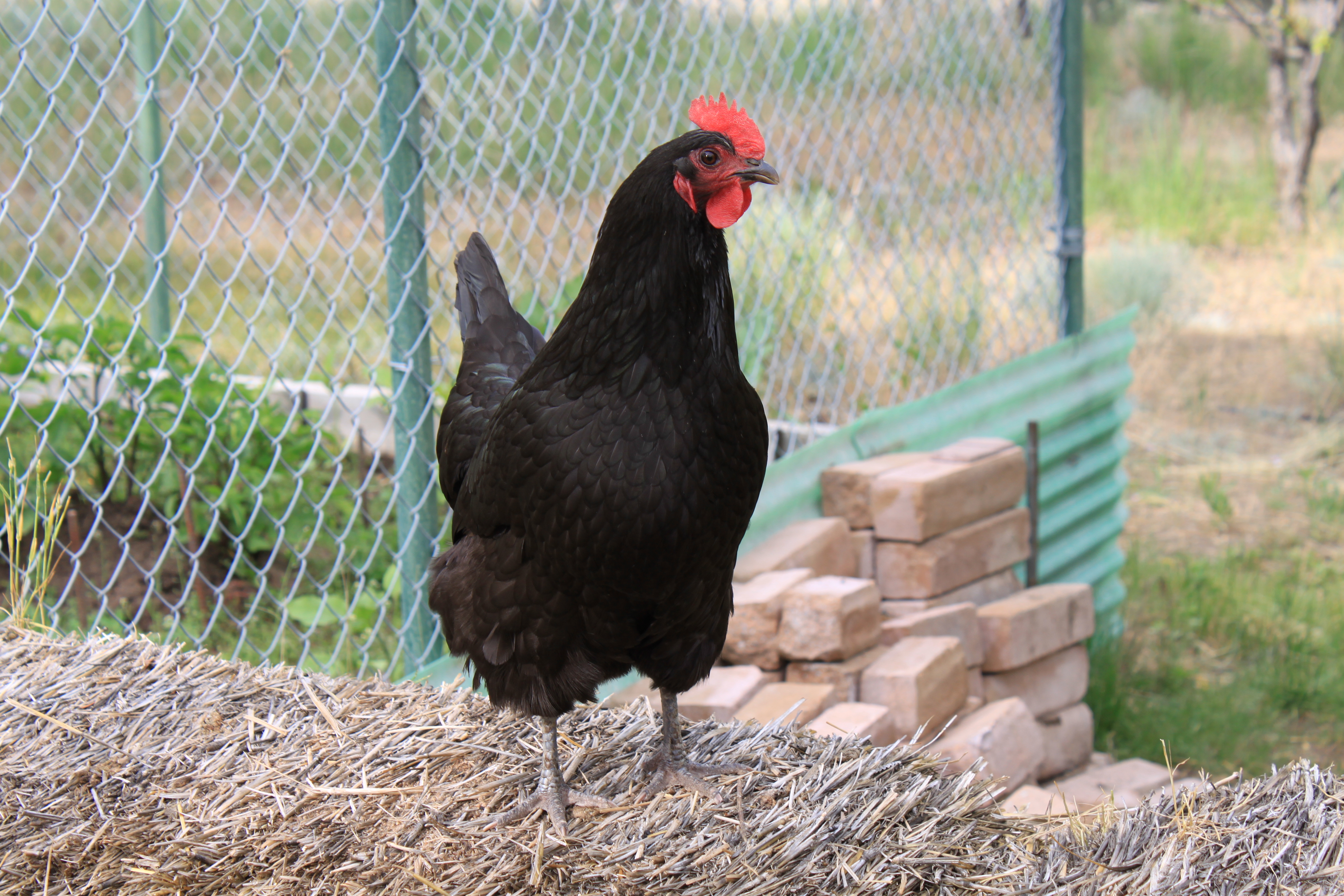
Austrolorp hen.
Credit:  Jason buildakicker Permission: CC BY-NC-SA 2.0


Austrolorp

Eggs: young hens will lay an average of 200 eggs year, but a hen was recorded in Australia and managed to lay 364 eggs in 365 days! The eggs are light brown in colour.

Personality: A generally docile, tame breed, often happy to be handled and curious. Good mother and broody.

Care: They are very easy to keep, and love to forage but happy enough if kept busy in relative confinement.


Rhode Island Red hens.
Credit: Sammmydavisdog Permission: CC BY 2.0

Rhode Island Red                                                 

Eggs: An average of 200 large brown eggs a year.

Personality: Calm, easy to tame birds, they make an ideal backyard chicken!

Care: Very easy to keep and are adaptable. They are not good broodies but are hardy.


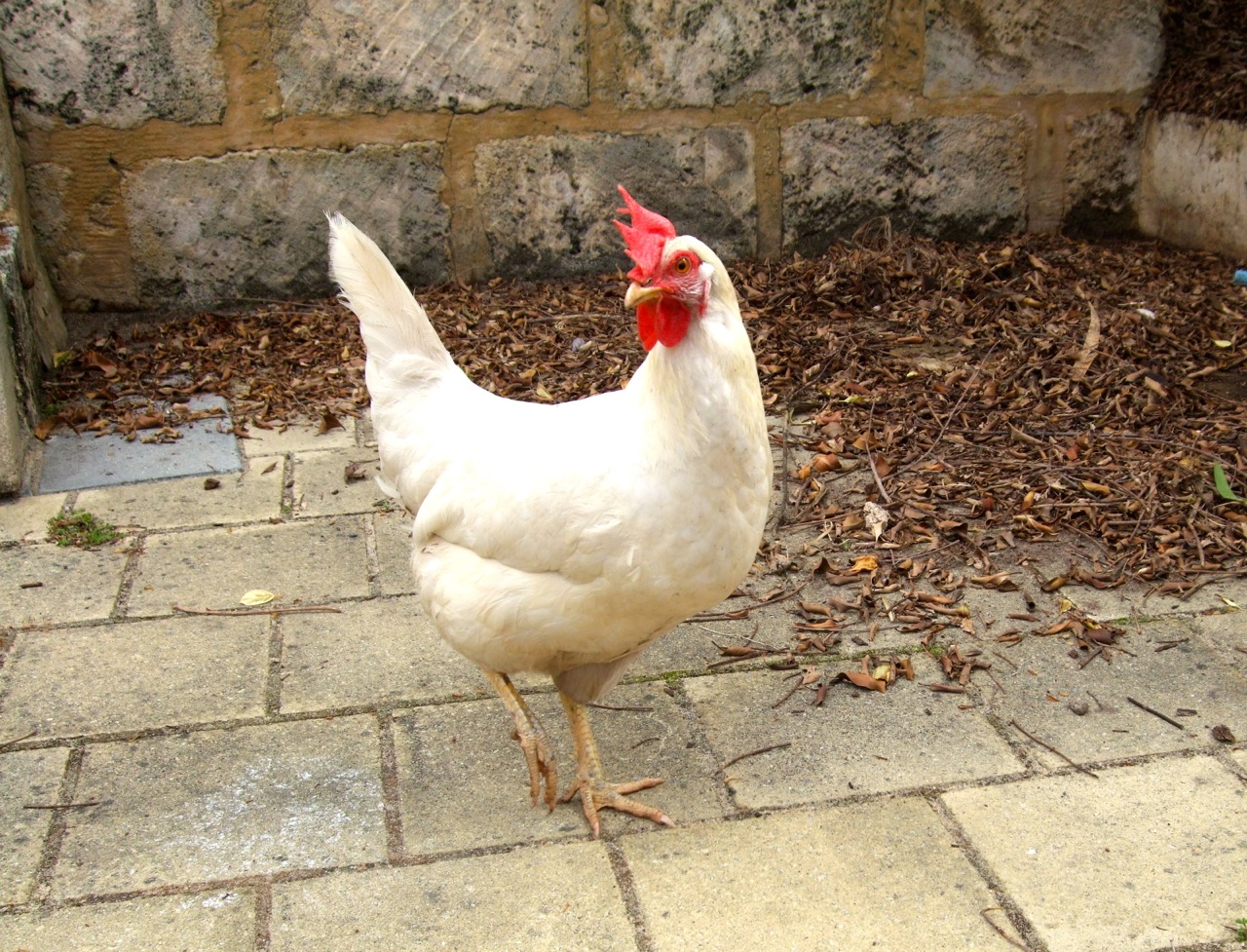
White Leghorn.
Credit: Lauredhel Permission: CC BY-NC-ND 2.0
Leghorn

Eggs: 200 + white eggs a year, depending on strain. Utility strains (particularly the White leghorn) lay more. The white leghorn is often used in the US in battery farms.

Personality: They are a Mediterranean breed so are flighty and excitable but some can be tamed and have hilarious characters if you manage it!

Care: Keep an eye on their combs in winter as they can get frostbite. They are good fliers.


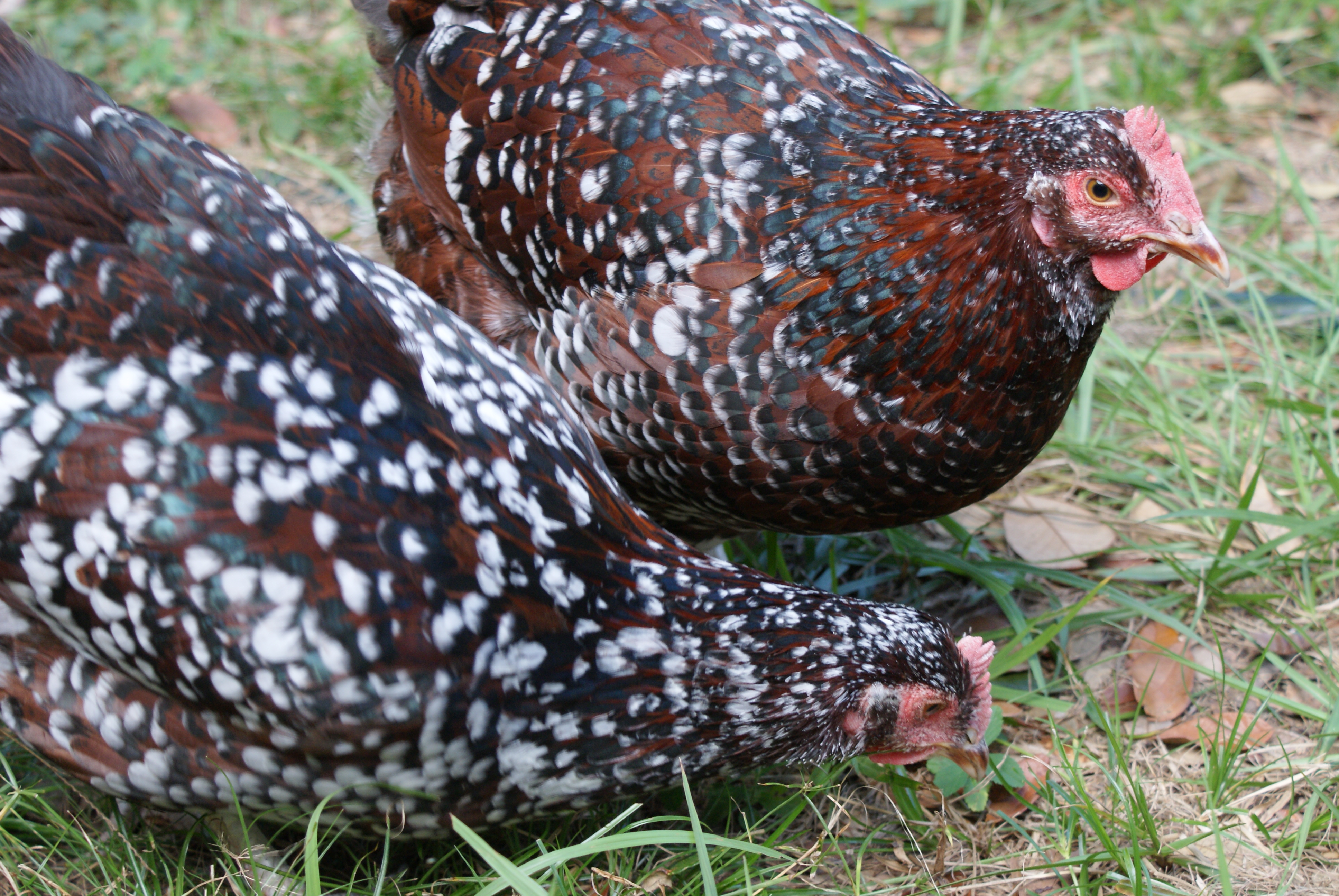
Speckled Sussex.
Credit:Shooting Chris Permission: CC BY-NC 2.0
Sussex

Eggs: Good stock can lay 200-220 eggs in a year, but some sources may lay less.

Personality: Curious, calm, and friendly, this bird is ideal for a small backyard flock and pets.

Care: Good broodies, and tolerate low temperatures. They can be kept confined but love to free-range or have a large run. Otherwise, they are very easy to keep.


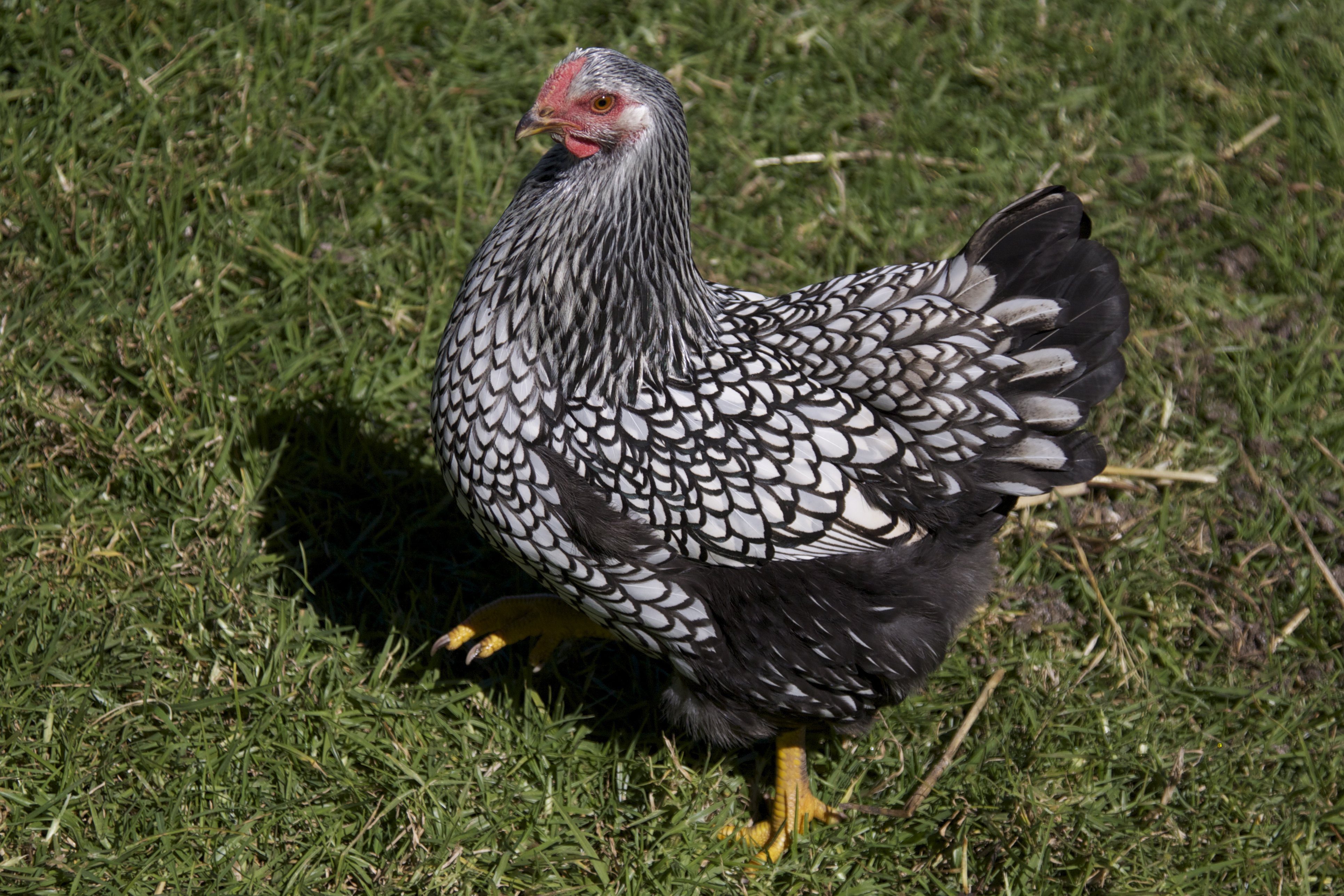
Silver Laced Wyandotte hen.
Credit: cskk Permission: CC BY-NC-ND 2.0
Wyandotte

Eggs: Hens lay 200 or more eggs in their first year, and the Sliver-laced variety is thought to be best layer.

Personality: Are happy in confinement or free-range, they are easy to tame and docile birds.

Care: Hardy birds, suited to most climates. Their small rose-comb makes them less susceptible to bullying and frostbite.


Wednesday, 29 May 2013

Updates...

Hi,
I know I haven't written for a while but I've been editing older posts, either which I hadn't quite finished or that I wanted to add to.
Please check them out!


Thanks for looking! :D

Pepper. 
Credit: birdbrain99


Friday, 24 May 2013

Chicken Care: Choosing a Chicken Coop

For happy, healthy chickens it is very important to have a good house for them. This is where they will roost at night and lay their eggs.
My first coop made of recycled wood. 
Credit: birdbrain99


If you follow the points below when building, converting or buying a coop, there is little that can go wrong:

  • Draught-free: Not only will a draught chill them, risking disease, in the winter months frostbite to the comb may become apparent due to cold, draughty conditions.
  • Spacious: Over-crowding can cause so many problems, and your birds may get injured. The coop will also get dirty faster. As a guide line, if you end up buying your coop please check the specification of how  many birds it can fit, and then take away 1 or 2 birds per 4, as the companies often work on smaller breeds or bantams (other chicken keepers recommend this. my own experience: I bought a coop online, it said it could fit 8 birds in, but I've never had more than five in it as there wasn't space on the perches and any more chickens would have had to sleep in the nestbox!)
  • Good ventilation: Despite the fact that I noted above not to have a draughty coop, some ventilation is a must. The best thing would be to have a small wire grid or a few holes just above where the chickens' heads will be whilst they are on the perch, or at the highest point where the roof meets the sides as this is where most of the foul air will gather.
  • Dry: There should be no way for water to get in, or condensation to build up: if you see condensation, more ventilation is required. The coop should not get damp either. This last problem can be prevented if the coop is raised off the ground.
  • Easy access: This includes both you and the hens. You will need to be able to access the coop for cleaning,collecting eggs and checking on the birds.
  • Easy to clean: Most things in the coop - such as the perches - should preferably be removable so that the coop can be maintained responsibly. There should be a large, secure access door to clean the main coop.
  • Secure and Predator Proof: There should be some way of locking both the human and chickens access doors, even if it is just a simple hook or bolt. The coop must also be predator proof, or you may find just a pile of feathers in the morning!
  • Insulated: This is not necessary - most coops aren't insulated - but if it is at all possible, particularly if you live in cold climates, it would be favourable.


Buying a coop.

There are a wide range of different coops on the market. Which one you choose in the end is up to you. However, your choice should be based primarily on the health and well-being of the birds. Of course, it's great if you can get a coop which is also pretty! It may be a much cheaper option to make your coop at home, and it can also be exactly how you want it then too. However, if you're not very handy, or don't have the time, a ready-made coop is a great option.


Converting  Existing Buildings

Have you already got a shed or out-building? Well, it may be a lot cheaper and convenient if you could just turn that into a chicken house! Most building floors are suitable, such as wood, brick or tiles, but do be aware that if you have a soil floor you will need to think carefully about predator-proofing, damp and cleaning. Just follow the points above, and there are unlikely to be any difficulties.

Building your own.

Another option is to build your own. My first coop was made of old pallet pieces that we collected from saw mills and recycling centres - completely free! If you don't want to design it all yourself, just search around and you can get plans and measurements of other people's coops, and all you have to do is nail the wood together!


 Left: Nest boxes, accessible from outside and with removable wall for cleaning.

Right: inside showing perch, window and nestboxes. 


Plastic, wood or something else?

You may have heard of a relatively new chicken coop called an 'Eglu'. It is a popular option in recent years, made of plastic. Many people think they are the best coops, and they are easy to clean, but some of the information from the company who sell them is misleading, and they are very small and without a proper perch or nest box. However, they do have an advantage because they are made of plastic so there are no crevices, slits, etc. in which Red Mite can hide (Check out this article). There is also the environmental issue. Plastic lasts forever, creating more litter where as responsibly-sourced wood does not. Many people do think they're easy to use, though.
There are also other plastic coops, and even ones made out of recycled materials which could be another option.
If you are planning on a more traditional look, made of wood, you might find it useful to place some lino or something similar on the floor for extra-easy cleaning. Check regularly for mites, and treat the wood with a pet-safe wood treatment.